
23 Dec 2025
PCC warns funding settlement ‘lacks essential detail’ and leaves policing facing untenable pressures
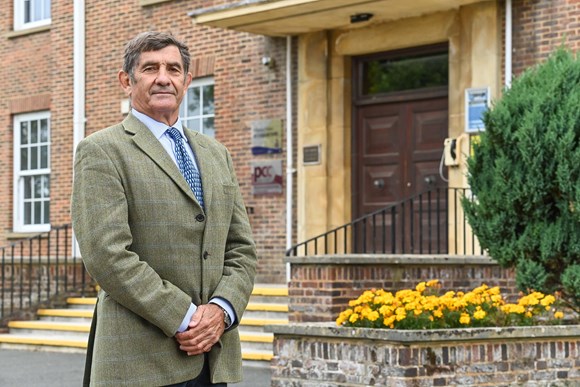
Wiltshire’s Police and Crime Commissioner - alongside other cross-party PCCs across the country - has raised serious concerns about the Government’s latest police funding settlement.
Philip Wilkinson has warned that the lack of detail and clarity in last week’s settlement puts even more pressure on policing budgets which are already stretched after last year’s failure by the government to fully fund National Insurance increases and inflation costs.
As Wiltshire Police, along with other police forces across the country, face funding uncertainty Mr Wilkinson outlined two major issues: the settlement “provides scant detail” and doesn’t explain how several key Government commitments will be delivered or funded.
Secondly, Mr Wilkinson criticised the Government for shifting more of the cost of policing onto local taxpayers through the precept, rather than providing the investment nationally.
He said: “While I recognise the significant pressures on public finances, the scant detail in the settlement is really disappointing and I am appalled at the government’s efforts to transfer the burden of policing from central government onto local taxpayers.
“Aside from some core figures, it does not set out the next steps for many things, including the Neighbourhood Policing Guarantee or how it will be funded, and it provides no provision for the capital investment required to sustain modern, efficient and resilient police forces at a time of rising demand.”
Mr Wilkinson highlighted the continued uncertainty around funding for top-down driven national strategies, including the government’s Violence Against Women and Girls (VAWG) Strategy announced on the same day.
He added that the settlement also appears to make no additional provision to tackle serious violence, knife crime, Anti-Social Behaviour hotspot activity and the future of the safer streets summer and winter of action activities.
Mr Wilkinson continued: “There is no clear indication of continued funding for critical government priorities including tackling VAWG, serious violence and knife crime. There is also no further detail on ASB hotspot funding or the future of the successful safer streets summer programme and winter of action focus, which forces are now expected to maintain as business‑as‑usual without dedicated funding.
“This lack of uncertainty places Wiltshire Police in a really difficult position as we go into the new year and the budget and precept setting process without the detail and clarity to make long-term, sustainable, financial decisions for the force and our communities. It is a situation which is untenable in the longer term.”
Mr Wilkinson emphasised that while Wiltshire fully supports the Government’s ambitions - particularly to halve knife crime, tackle serious violence and VAWG - these are national challenges that require sustainable national investment.
He said: “These are national policy commitments that require long‑term national funding. They cannot simply be absorbed into existing budgets or disproportionately shifted onto local communities through council tax precepts – which is seemingly now becoming the norm as precept rises are ‘baked in’ to every funding settlement. This leaves me with no option but to raise the police precept – or the Force faces having to cut services.”
Mr Wilkinson also referenced the Local Government Settlement published on 17 December, which acknowledged the financial pressures on policing and introduced a mechanism for PCCs to request limited flexibility on precept referendum principles in exceptional circumstances.
He added: “The Government has said such requests will be considered on a case‑by‑case basis and only in truly exceptional situations. Unfortunately the government has failed to define what they mean by exceptional situations that further cloudy an uncertain fiscal environment. Nonetheless, it is a recognition of the very real pressures we are facing.
“Of course I, on behalf of the county and Wiltshire Police, will explore all avenues available to secure additional funding through any mechanisms offered. However, our communities should not be disproportionately ‘put upon’ to fund what are effectively national challenges.
“National epidemics of serious violence, knife crime and VAWG demand national solutions and national funding. I will already be proposing a £15 increase per year, per Band D property but I would be doing Wiltshire Police a disservice if I did not have these conversations with Government around potential precept increases above my original proposal.”
Mr Wilkinson reiterated the need for a long‑term, sustainable approach to police funding but says it must be looked at alongside police reform, devolution and PCC transition arrangements.
He said: “I remain committed to ensuring public money is used efficiently. But the long‑term viability of policing depends on a fair, properly funded national settlement and an updated police funding formula that reflects the realities and pressures of modern policing.
“Each of the changes to the policing and local government landscape need to be looked at together, and not independently or piecemeal – otherwise there is a very real possibility of millions of pounds of taxpayers’ money being wasted without any significant improvement to local policing or local authority services.”
Contact Information
Emma Morton
Head of Communications and Engagement
Wiltshire OPCC
07384 820760
emma.morton@wiltshire.police.uk
Downloads


Powered by Onclusive PR Manager © 2026